Water Filtration
& Water Softener Installation
Dealing with hard water scale, chlorine smells, or iron stains? Hard water ruins plumbing fixtures, clogs water heaters, and dry out skin. We provide professional whole-house water filtration and softener installations across Virginia. Call today to schedule a water quality test!
Rusty or Foul Water? Schedule a Filtration Check
If your tap water shows a sudden rusty color, metallic taste, or foul odor, your well pump or local water lines may be failing. Shut off water supply if contaminants are suspected, and call us to run diagnostics and install filtration systems.
Clean, Safe Water for Your Home and Family
Water utilities treat water to meet safety standards, but it can still contain chlorine, sulfur, iron, and hard water minerals. At Virginia Plumbing Company, we install whole-house water filtration systems and water softeners to protect your family and plumbing.
A water softener works by removing calcium and magnesium minerals through ion exchange. This prevents scale buildup inside water heaters, pipes, and fixtures, extending their lifespan and lowering energy bills.
Whole-house carbon filters remove chlorine taste, rust, sediment, and chemicals, providing clean drinking water from every tap in your home. If you want to protect your appliances, see our tankless descaling flush services. We also offer fixture installations to match your clean water.
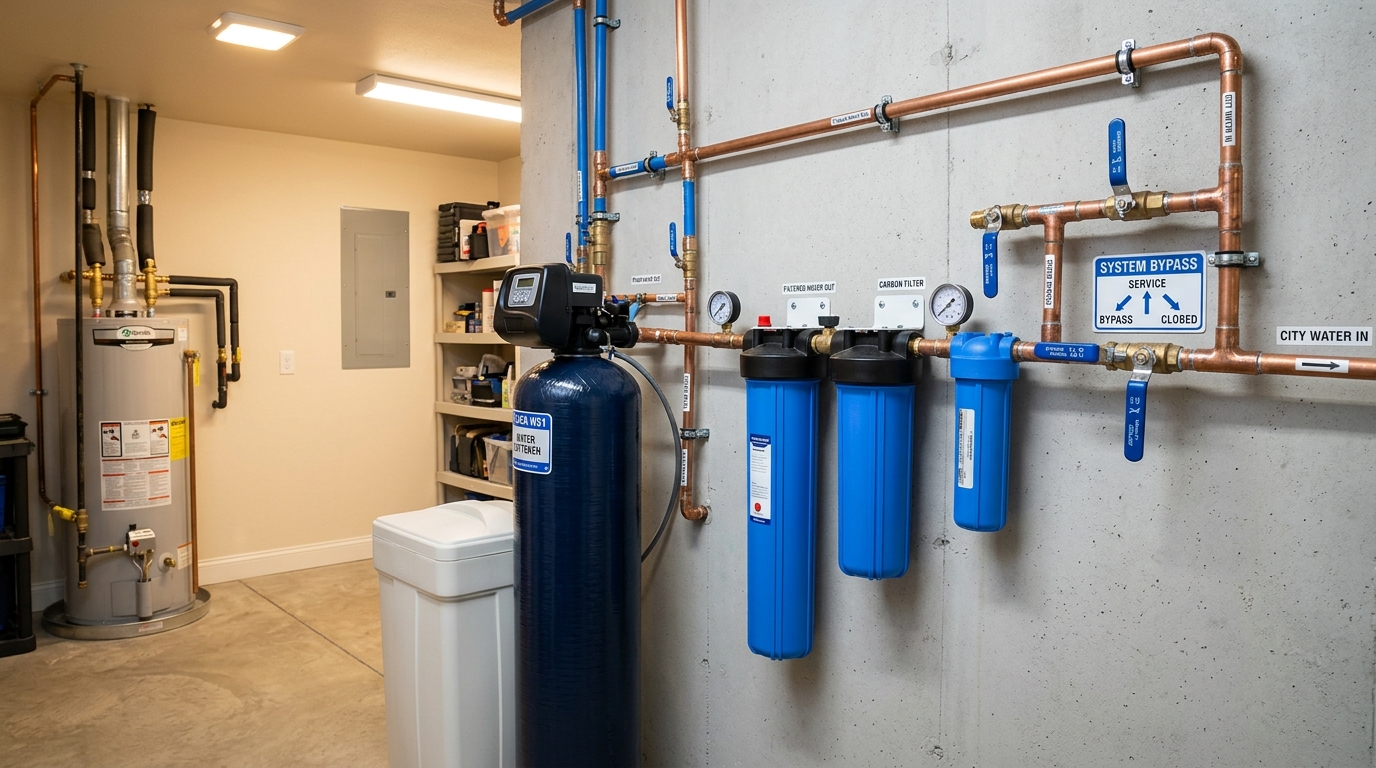
We install whole-house filtration and water softener systems.
Virginia Water Quality & Mineral Scale Issues
Water quality varies across Virginia. Rural homes relying on private wells often deal with iron stains, sulfur odors, and low pH. Urban areas with municipal water often have high chlorine content and hard water scale. Hard water minerals crystallize in pipes, leading to clogs.
Scale buildup reduces water heater efficiency. Installing a water softener removes these minerals, keeping your plumbing clear. If you have copper pipes, scale can accelerate corrosion pinholes. Our emergency plumbers provide prompt leak repairs. We recommend water testing to design the right filtration system for your home.
What to Do While You Wait for Our Crew
Prepare for your water testing and filtration consultation with these simple steps:
1. Note Water Issues
List the water issues you have noticed: white scale on fixtures, rust stains in sinks, chlorine smells, dry skin, or laundry discoloration.
2. Clear Install Space
Clear out space in your basement or garage near your main water shutoff valve. This is where whole-house systems are installed.
3. Gather Water Bill
If you are on municipal water, have your recent water bill ready. It contains contact info and water quality reports from the city.
Our Water Filtration Installation Process
Here is how we analyze your water and install whole-house filtration and softener systems:
Water Testing
We run a water test to measure hardness grains, iron levels, pH, chlorine, and total dissolved solids (TDS) in your tap water.
System Sizing
We select the right system based on test results, water usage, and number of bathrooms to ensure consistent flow rates.
Plumbing Hookup
We connect the bypass valve and filter manifold to your main water line. We install the softener brine and mineral tanks and connect drain lines.
Testing & Handover
We load the system with salt, run a manual regeneration cycle, test water hardness to verify operation, and adjust the settings.
Water Filtration Systems Comparison
Compare different whole-house water filtration options:
- Ion-Exchange Water Softeners: Remove calcium and magnesium minerals, replacing them with sodium. Highly effective at preventing scale buildup in water heaters and pipes.
- Active Carbon Block Filters: Remove chlorine taste, organic chemicals, sulfur odors, and sediment. Best for improving drinking water taste and removing municipal chlorine.
- Reverse Osmosis (RO) Systems: Remove heavy metals, fluoride, lead, and dissolved solids. Installed under kitchen sinks to provide pure drinking water.
Combining a whole-house carbon filter with a water softener provides complete water protection. If your water heater is failing due to mineral scale, see our water heater services. If you have blocked pipes, see our drain cleaning services.
Filtration Project Invoices
We offer flat-rate pricing. Here are common estimates for water filtration and softener installations:
Note: Final prices depend on accessibility, system size, and severity. We provide a firm quote before any work begins.
Water Filtration FAQs
Answers to common questions about water softeners, hard water minerals, and system maintenance:
Hard water contains high levels of dissolved calcium and magnesium minerals.
Warning signs of hard water include white scale buildup on faucets and showerheads, soap scum in tubs, stiff laundry, dry skin, and spotted glassware.
In most cases, you need to add salt to the brine tank every 4 to 6 weeks.
We recommend checking the salt level monthly and keeping the tank at least half full to ensure the regeneration cycle runs effectively.
A water softener specifically removes hard water minerals (calcium and magnesium) through ion exchange.
A water filter removes contaminants like chlorine, lead, chemicals, sediment, and sulfur to improve taste and remove odors.
Yes. The amount of sodium added to softened water is very small, typically less than a slice of bread per quart of water.
If you are on a strict low-sodium diet, you can use potassium chloride pellets in your softener brine tank instead of standard salt.