Drain Cleaning
& Hydro-Jetting Services
Dealing with a backed-up sewer line or slow-draining sinks? Regular snaking only punches temporary holes in blockages. Our high-pressure hydro-jetting services scrub your pipe walls clean, removing grease, scale, and stubborn tree roots. Call now for professional local dispatch!
Sewer Backup Warning: Stop Using Fixtures Instantly
If water is backing up into your bathtubs or toilets when you run the washing machine or wash dishes, your main sewer line is blocked. Stop using all water, sinks, and showers immediately. Running more water will cause sewage to overflow from low-point drains, creating health hazards and property damage.
Clean Sewer Pipes with Hydro-Jetting Technology
Slow drains and recurring blockages are annoying and can indicate severe sewer line issues. At Virginia Plumbing Company, we use advanced hydro-jetting equipment to clean your plumbing system. Hydro-jetting uses water pressurized up to 4,000 PSI to clear grease, sludge, soap residue, and invasive tree roots from your sewer lines.
Traditional drain snakes work by punching a hole through blockages, leaving grease and scale on the pipe walls, which leads to future clogs. Hydro-jetting act as a pressure washer for your pipes, restoring the line to its original interior diameter and flow capacity.
Before we jet any line, we conduct a sewer camera inspection. This allows us to inspect the condition of your pipes and locate the blockages. If the sewer line is cracked or collapsed, we recommend our specialized trenchless sewer restoration to rehabilitate the line without digging up your landscape.
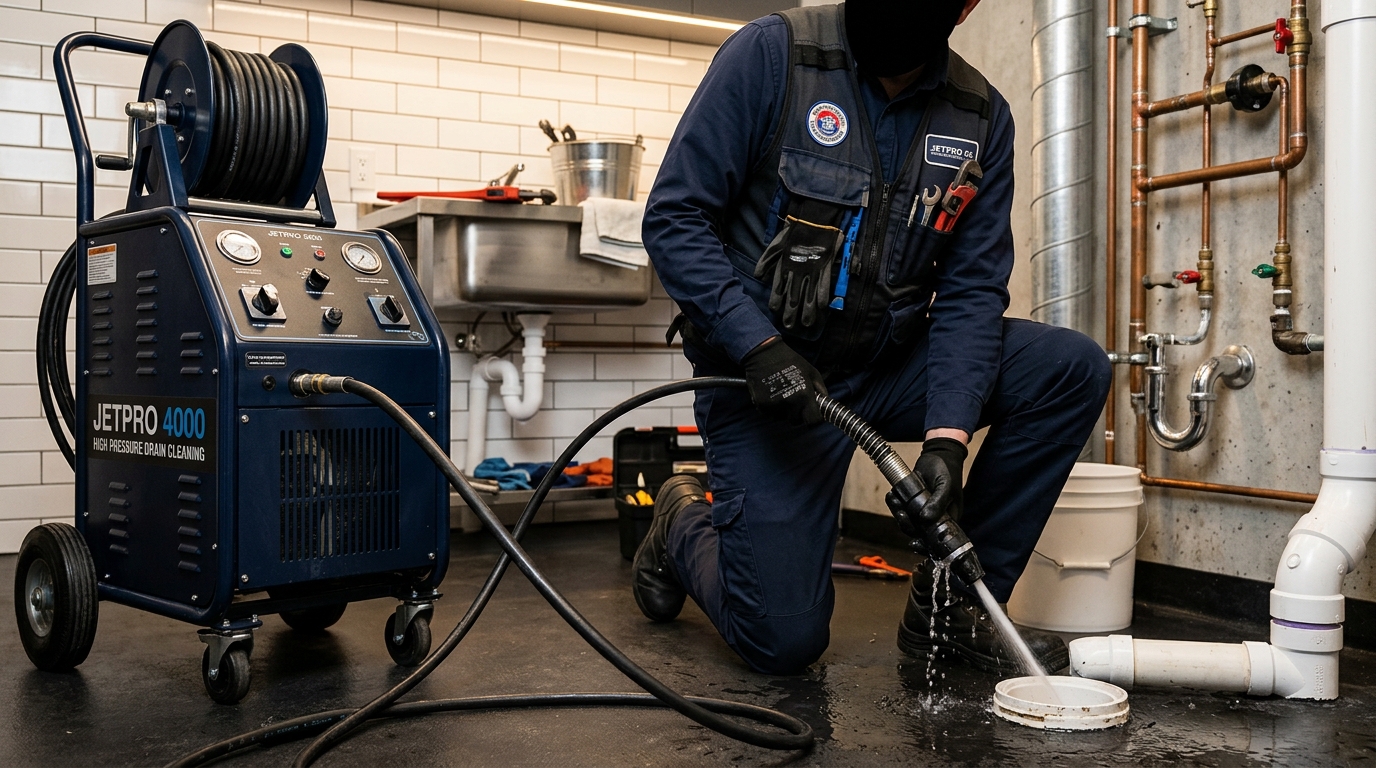
Our hydro-jetting equipment blasts away tree roots, scale, and grease deposits.
Virginia Sewers & Root Intrusion Risks
In Virginia, old clay and cast iron sewer lines are common. Over decades, tiny cracks form in these pipe joints. Tree roots, seeking moisture and nutrients, enter through these micro-cracks. Once inside, roots grow rapidly in the warm, wet environment, creating root balls that catch waste and grease, causing main line backups.
Chemical drain cleaners from big-box stores are corrosive and rarely clear roots. They can eat through old cast iron or copper pipelines, leading to leaks. Our hydro-jetting is safe, chemical-free, and clears roots completely. If you are upgrading your bathroom plumbing, see our fixture replacement services to match your clean drains with water-efficient toilets.
What to Do While You Wait for Our Crew
While our drain cleaning crew is on the way, follow these tips to keep your household safe and prepared:
1. Avoid DIY Chemicals
Do not pour harsh chemical drain cleaners down the drain. They can burn skin, melt PVC pipes, corrode old cast iron, and create hazards for our technicians.
2. Locate Cleanout
Find your main sewer cleanout fitting. It is usually a black or white PVC cap located near your foundation wall outside, or in the basement floor.
3. Clear access path
Clear items from under the sink, around floor drains, or near the outdoor cleanout so our technician can set up their jetting hoses instantly.
Our 4-Step Drain Cleaning Protocol
We ensure your drains are cleaned safely and effectively. Here is our 4-step sewer clearing process:
Camera Scoping
We insert a waterproof camera down the line. This allows us to inspect the blockage type and check for pipe damage before using high pressure.
Nozzle Selection
We select the right hydro-jetter nozzle: rotary nozzles for grease, cutting heads for tree roots, or penetrating jets for sand blockages.
Hydro-Jet Flushing
We feed the jetter hose through the cleanout, using high pressure to scrub the pipe interior clean. Water pressure pulls the hose through the line, blasting debris back.
Final Verification
We repeat the camera inspection to verify that the pipe is completely clean and clear. We check flow rates and provide a video copy for your records.
Hydro-Jetting vs. Snaking Comparison
Understanding the difference between drain snaking and hydro-jetting helps you choose the right fix for your system:
- Cable Snaking (Drain Augers): Best for simple, isolated clogs like toilet paper, hair, or small objects. It punches a hole through blockages but leaves grease, sludge, and tree roots behind.
- High-Pressure Hydro-Jetting: Best for main sewer line cleaning. Blasts away roots, scales, grease, and sludge, cleaning pipe walls completely. Not recommended for weak, broken pipes.
- Chemical Cleaners: Not recommended. Corrosive chemicals sit in standing water, damaging cast iron and copper lines and polluting the local water table.
If your sewer lines are too weak or cracked for hydro-jetting, we can reinforce them with epoxy liners. For households looking to prevent grease buildup, installing a professional garbage disposal through our fixture installation crew helps grind down kitchen food waste before it reaches your main line.
Typical Drain Cleaning Invoices
We offer transparent, upfront rates. Here are average estimates for drain and sewer cleaning:
Note: Final prices depend on accessibility, system size, and severity. We provide a firm quote before any work begins.
Drain & Sewer Cleaning FAQs
Common questions about hydro-jetting, drain snaking, and preventative maintenance:
Before any hydro-jetting, we perform a sewer camera inspection to inspect the condition of your pipes. If the cast iron is sound, hydro-jetting is safe.
However, if the pipes are paper-thin, heavily corroded, or collapsed, hydro-jetting pressure could cause damage. In those cases, we recommend snaking or trenchless sewer line repair.
For homes with mature trees and a history of root intrusion, we recommend preventative drain cleaning or hydro-jetting every 18 to 24 months.
Commercial properties, especially restaurants that handle grease daily, often require hydro-jetting every 3 to 6 months to prevent kitchen blockages.
Signs of a sewer line blockage include multiple drains running slow, gurgling noises from toilets or floor drains, water backing up into your shower when you run the washing machine, and sewage odors around your yard.
No, 'flushable' wipes are not safe for your sewer system. Unlike toilet paper, which dissolves in water within minutes, flushable wipes are made of synthetic fibers that do not break down.
They catch on pipe rough spots, rust, or tree roots, leading to toilet paper backups and grease clogs.