Slab Leak Detection
& Under-Concrete Repairs
High water bills or hot spots on your floor? You might have a slab leak. Water lines running under concrete foundations can crack, putting your home's structural stability at risk. We use advanced acoustic and thermal sensors to locate and repair slab leaks across Virginia. Call now for fast dispatch!
Suspect a Slab Leak? Shut Off Water at the Main Valve
If you hear water running continuously behind walls or under floors when all faucets are closed, you likely have a slab leak. Turn off your home's main water valve immediately to stop the flow of water beneath your foundation. This helps prevent soil erosion and foundation cracks while you wait for our detection crew.
Protect Your Home from Costly Foundation Slab Leaks
A slab leak occurs when the water supply or sewer lines running beneath your home's concrete foundation split, crack, or corrode. Because these pipes are buried under concrete, slab leaks can go unnoticed for weeks, slowly eroding the soil and causing the foundation to crack, sink, or lift. At Virginia Plumbing Company, we specialize in non-invasive slab leak detection and repairs.
We use advanced digital acoustic sensors and thermal imaging cameras to listen for running water and locate hot spots under the concrete slab. This high-tech locating allows us to find the exact location of the leak without tearing up your flooring unnecessarily.
Once located, we present the best repair options. Depending on the pipe's condition, we can perform a localized spot repair by cutting through the concrete, or bypass the leaking line entirely by routing new water lines through your walls or attic. If your home has suffered water damage, our emergency plumbing team is ready 24/7 to secure your pipelines.
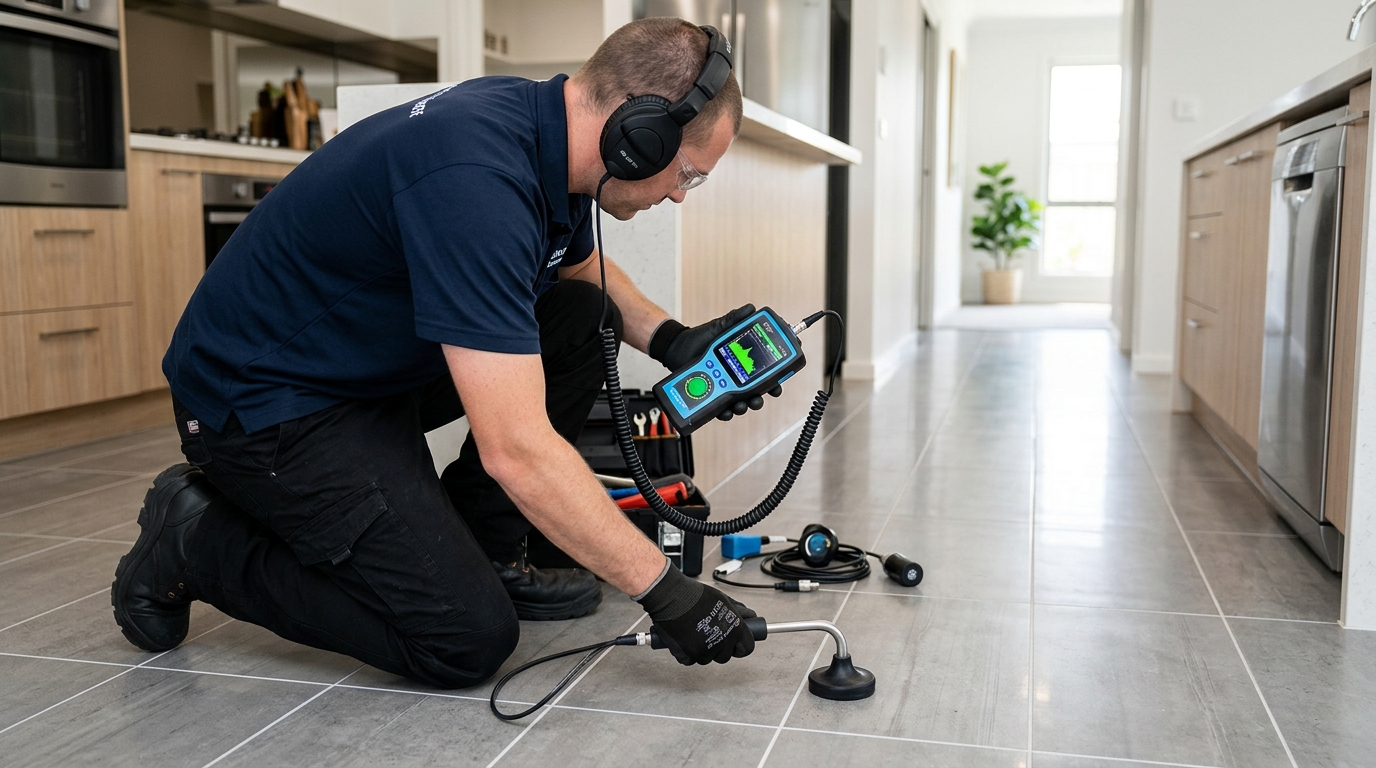
We use acoustic and thermal locating tools to find under-slab leaks without damage.
Virginia Clay Soils & Slab Failures
Many areas in Virginia feature expansive clay soils. These soils swell when wet and shrink when dry, causing concrete slabs to shift. This constant movement puts friction on copper pipes buried in the soil. Over time, concrete contact or stones rubbing against copper walls creates leaks.
Chemical reactions between soil minerals and copper pipes also accelerate corrosion. Installing a whole-house water filter can reduce hard water deposits that add friction inside pipes. See our water filtration services for details. If you suspect an underground line leak, our experts can run pressure tests to locate the source.
What to Do While You Wait for Our Crew
If you suspect an active water leak under your concrete slab, follow these steps to secure your home:
1. Check Water Meter
Turn off all water fixtures inside and outside. Walk out to your water meter and look at the red leak indicator wheel. If it is spinning, water is actively leaking.
2. Track Hot Spots
Walk barefoot across your concrete or tiled ground floors. Note any unusually warm areas, which suggest a hot water line leak beneath the slab.
3. Gather Blueprints
If you have the original building blueprints or plumbing schematics, have them ready. Knowing where the utility lines run helps us locate leaks faster.
Our Slab Leak Location & Repair Process
Here is how we locate and repair water leaks under your concrete foundation safely and efficiently:
Pressure Diagnostics
We perform a pressure test on your hot and cold water lines. By isolating individual runs, we determine which line is losing pressure and leaking.
Acoustic Locating
We use acoustic microphones to listen through the concrete, identifying the sound of water spraying under pressure to pinpoint the leak.
Line Bypass/Repair
We present repair options: a localized repair through the concrete slab, or a line reroute that installs a new PEX pipe through walls and attics.
Restoration & Test
After completing the repair, we pressure-test the system to ensure it is secure. We backfill any excavated soil and pour fresh concrete to restore your floor.
Slab Leak Repair Methods Comparison
Compare different repair options to find the best choice for your foundation:
- Direct Slab Penetration (Spot Repair): We cut through concrete to access and repair the pipe section. Best for newer plumbing systems or when only one leak is present.
- Pipe Rerouting (Bypass): We abandon the underground pipe and run a new PEX line through walls and attics. Best for older copper pipes prone to multiple leaks.
- In-Place Epoxy Restoration: We coat the pipe interior with liquid epoxy resin to seal leaks from the inside. Best for long utility runs with minimal access options.
Rerouting leaking copper lines with modern PEX is often the safest, most reliable repair choice. For homes dealing with drain lines leaking under the concrete, see our drain cleaning services and camera checks to locate blockages.
Slab Leak Service Invoices
We provide detailed, upfront estimates. Here are common costs for slab leak services:
Note: Final prices depend on accessibility, system size, and severity. We provide a firm quote before any work begins.
Slab Leak FAQs
Answers to common questions about under-slab water leaks, insurance coverages, and diagnostics:
Warning signs of a slab leak include an unexplained jump in your water bill, hearing the sound of running water when faucets are closed, damp carpet or warped wood flooring, hot spots on your ground floors, and water pooling around your home's foundation.
Generally, standard homeowner's insurance policies cover the tear-out cost to access the pipe and the repair of water damage. However, they may not cover the actual plumbing fee to fix the leaking pipe.
We recommend contacting your insurance agent immediately, documenting the damage with photos, and keeping all diagnostic receipts.
Under-slab copper pipes fail due to chemistry and physics. Expansive clay soils shift, rubbing the copper against concrete and gravel, which thins the pipe wall.
Additionally, acidic soil minerals corrode copper over time, resulting in pinhole leaks. High water velocity and pressure also accelerate wear on pipe bends.
Yes. In many cases, we bypass the leaking line entirely by routing new PEX pipelines through your walls and attic. This avoids cutting through your floors and drywall.