Frozen Pipe Thawing
& Emergency Repair Services
Pipes frozen in your crawl space or walls? Don't wait for them to burst and flood your home. We provide safe, electronic pipe thawing and fast repairs across Virginia 24 hours a day. Call now to get an expert plumber sent to your door!
Active Emergency? Shut Off Your Main Water Valve Right Now
If a water pipe has already split and is actively leaking or spraying water, you must shut off the main water line immediately. This valve is typically located in your crawl space, basement utility closet, or inside a green box near the street curb. Turn the valve wheel clockwise (or flip the lever flat) to stop the water flow and prevent severe flooding while our truck is en route.
Protect Your Property from Burst Pipes
When winter temperatures drop below freezing, water inside poorly insulated pipes turns into ice. As the water freezes, it expands inside the line. This expansion creates extreme pressure between the ice blockage and your closed faucets. Eventually, this pressure causes the pipe wall to split or break open.
At Virginia Plumbing Company, we know that you usually won't notice the leak while the pipe is still frozen solid. However, as soon as the weather warms up and the ice thaws, water will pour out of the split section under high pressure, quickly flooding your crawl space, basement, or living areas.
If your faucets are not running water, or you hear a strange hissing noise behind your walls during a cold snap, you likely have frozen pipes. Do not attempt to thaw pipes yourself with open flames or hair dryers. Open flames are a major house fire hazard, and uncontrolled heating can cause the pipe to split open instantly. Our licensed plumbers use professional, safe electronic pipe thawing equipment to heat your pipes evenly, preventing damage and protecting your home.
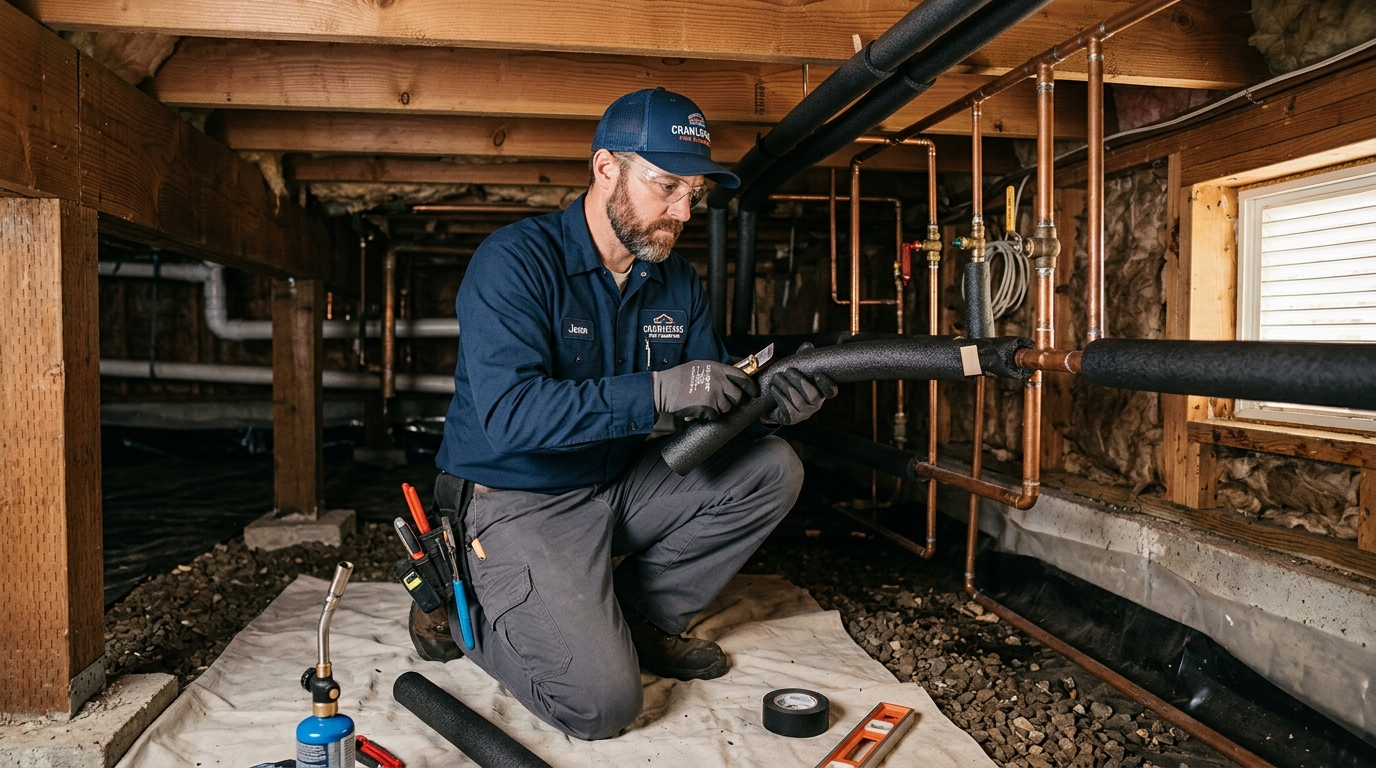
Our local plumbers wrap exposed pipelines in insulation sleeves.
Virginia Frost Warning Calendar & Freeze Risks
Virginia has a unique climate where temperatures can drop from comfortable autumn levels to subzero winter ranges in a matter of hours. Peak pipe freeze risk in Virginia runs from **November 15th through March 15th**. Cold winds blowing off the Blue Ridge Mountains or coastal damp air can drive crawl space temperatures below 20 degrees within an hour.
Many homes in regions like Northern Virginia, Richmond, and the Shenandoah Valley are built with ventilated crawl spaces under the floor. While these vents are helpful for letting moisture out in the hot, humid summer, they can become a major hazard in the winter. If crawl space vents are left open during a freezing cold snap, the freezing winter wind blows directly across your water pipes. This creates a wind-chill effect that can freeze your pipes within hours, even if the temperature inside your house is set to a warm 70 degrees.
What to Do While You Wait
If you have discovered a frozen pipe or active split line, follow these three steps immediately before our dispatcher arrives:
1. Shut Off Main Water
Shutting off your main water valve clockwise is the single best way to limit flooding damage. This stops new water from entering your plumbing system, reducing active leaks down to a trickle.
2. Open Faucets
Open your warm water faucets slightly. As the ice blockage begins to melt, releasing water pressure through open taps prevents the pipe from building steam or expanding further.
3. Clear Access Space
Clear the path to your crawl space access hatch, basement corner, or water heater closet. Having clear work zones lets our plumber set up the electronic thawing clamps instantly upon arrival.
Our 4-Step Thawing & Repair Process
Here is how we locate, thaw, and repair frozen pipes safely without putting your home at risk.
Water Isolation
First, we locate and turn off your main water valve. This ensures that if any pipes have already split, water won't flood your home once the ice block thaws. If your home has already experienced flooding, we coordinate immediate water containment and line repairs through our emergency pipe and leak repair dispatch crew.
Locating the Blockage
We trace your plumbing lines through crawl spaces, attics, and outer walls to find the exact point where the ice blockage has formed. We use thermal imaging sensors to locate the cold block without having to cut open your drywall or ceilings unnecessarily.
Safe Electronic Thawing
We connect professional thawing machines to the pipe. Using safe, low-voltage electrical currents, we heat the pipe evenly to melt the ice blockages safely. This electrical method is highly recommended for metal pipes because it warms the entire line at once, avoiding hot spots that cause splits.
Repair & Insulate
Once thawed, we check the lines for cracks. If we find any split pipe sections, we replace them immediately using flexible, freeze-tolerant pipes. Finally, we wrap the water lines in thick closed-cell foam insulation sleeves to protect your plumbing from future freezing.
How Different Pipes Stand Up to Freezing
Not all water pipes react the same way to freezing temperatures. Understanding what material your plumbing is made of can help you estimate your risk and decide on the best replacement options:
- Copper Pipes: Extremely common in older Virginia homes. While copper is highly durable under normal conditions, it is rigid and has zero flexibility. When water freezes inside a copper pipe, the metal will split easily, requiring immediate plumbing sections cut and replaced.
- Rigid Plastic (CPVC & PVC) Pipes: Often used for water supply and drainage lines. CPVC gets very brittle when exposed to freezing cold. If water freezes inside CPVC, the pipe wall will shatter or crack along the seams, leading to major leaks upon thawing.
- Flexible PEX Pipes: The modern standard for plumbing installations. PEX is made of flexible polyethylene plastic, allowing it to expand up to three times its normal width when water turns to ice. While PEX can still split under extreme subzero freeze cycles, it is significantly more freeze-resistant than copper or CPVC. We highly recommend PEX for plumbing updates in unheated areas.
Note: If freezing winter cold cuts off water flow to your heating system or boilers, it can quickly cause mechanical failure. If your home heating boiler is shutting off due to a frozen water intake line, contact our team immediately for prompt diagnostic valve testing and water heater services support. Read more about our licensed plumbers and qualifications to manage your mechanical heating.
How to Prevent Frozen Pipes in the Future
Taking a few simple preventative steps in the fall can protect your home's water lines and save you thousands of dollars in emergency plumbing repairs and water damage cleanups:
- Close Your Crawl Space Vents: Walk around your home's foundation in late autumn and close all crawl space vents. This blocks freezing winter winds from blowing directly onto your pipes.
- Wrap Pipes in Foam Insulation: Install foam pipe sleeves on all exposed water lines in unheated areas. Make sure the sleeves fit tightly and seal the seams with tape.
- Disconnect Garden Hoses: Detach all outdoor hoses from exterior spigots before the first frost. If a hose is left connected, water trapped inside can freeze and split the outdoor faucet body inside your wall, requiring exterior fixture replacements.
- Install Outdoor Faucet Covers: Place insulated styrofoam dome covers over all outdoor hose bibs to keep freezing air away from the metal spigots.
Tip: Mineral scale deposits inside your pipes restrict water flow and can accelerate freeze blockages by giving ice crystallization points. Installing soft water from one of our professional water filtration systems keeps your pipe interiors clean, ensuring healthy water flow and reducing freeze scaling risks.
Typical Project Invoice Breakdowns
We offer clear flat-rate pricing. Here are common estimates for winter pipe services:
Note: Final prices depend on pipe accessibility, location (crawl space vs behind drywall), and damage extent. We provide a firm quote before work begins.
Frozen Pipe FAQs
Get honest, detailed answers about frozen pipe emergencies, insurance coverages, and safety guidelines.
No, you should never use a blowtorch or open flame to thaw frozen pipes. This is a very common cause of devastating house fires. Water pipes are often located near wooden wall framing, insulation, or building vapor barriers that can catch fire instantly.
Additionally, applying direct, intense heat to a single section of a metal pipe causes the water inside to boil rapidly, turning it into steam. Because the pipe is blocked by ice on both sides, this steam creates extreme pressure, which can cause the pipe to split or explode, shooting scalding water and steam out and causing severe injury.
Generally, most standard homeowner's insurance policies cover the water damage cleanup, drywall replacement, and flooring repairs caused by a burst water line. However, they may deny your claim if they find that you neglected the property (for example, leaving the house completely unheated during the winter).
Additionally, policies usually cover the cost of repairing the water damage but may not pay for the actual plumbing fee to fix the broken section of pipe. We recommend contacting your insurance agent immediately, documenting the damage with clear photos, and keeping all repair receipts.
If you leave the pipes to thaw naturally by raising the temperature inside your house, it can take anywhere from 12 to 48 hours for the blockage to melt completely. Waiting this long is risky because the pipe is under continuous high pressure and can split at any moment.
By hiring our professional team, we utilize electronic thawing equipment that passes low-voltage electrical currents through metal pipes. This warms the entire line evenly, allowing us to melt an ice block safely in about 30 to 60 minutes once we have hooked up our thawing clamps.
If a pipe bursts, the first and most critical step is to turn off your home's main water shutoff valve immediately. This valve is typically located in your basement, crawl space, utility closet, or near your water meter out by the street. Turning this valve clockwise shuts off all water flowing into your home, stopping the active flood.
Next, open your faucets to drain out any remaining water trapped inside the pipelines, which helps reduce the flow from the split section. Collect what water you can in buckets, and clear out any personal items from the flooded area to protect them from damage while you wait for our plumber.