Tankless Descaling
& Maintenance Flush Services
Is your tankless water heater losing pressure, showing error codes, or failing to heat? Mineral scale buildup inside the heat exchanger blocks heat transfer, reducing efficiency. We provide expert tankless descaling flushes across Virginia. Call today to schedule your annual maintenance!
Tankless Showing Error Codes? Schedule a Maintenance Flush
If your tankless unit shows error codes like 'E1' or '11' (No Ignition) or '12' (Flame Loss), it may be shut down due to mineral scaling or dirty filters. Running a tankless system without flushing can damage the heat exchanger. Call us immediately to arrange a professional diagnostic check and descaling flush.
Restore Tankless Performance with a Descaling Flush
Tankless water heaters are efficient, heating water on demand to provide endless hot water. However, because they heat water instantly, calcium and magnesium minerals in hard water settle inside the copper heat exchanger. At Virginia Plumbing Company, we provide professional descaling flushes to keep your tankless system running at peak performance.
Over time, scale forms an insulating barrier inside the heat exchanger. This causes the burner to run longer and hotter to heat the water, increasing energy bills and stressing the heat exchanger. This can lead to cracks and system failure.
Manufacturers recommend flushing tankless water heaters every 12 to 24 months, depending on water hardness. We connect utility pumps to the unit's service valves and circulate a food-grade citric solution for 60 minutes. This dissolves the scale and restores flow. If your home has hard water, see our water softeners and filtration systems to protect your appliances.
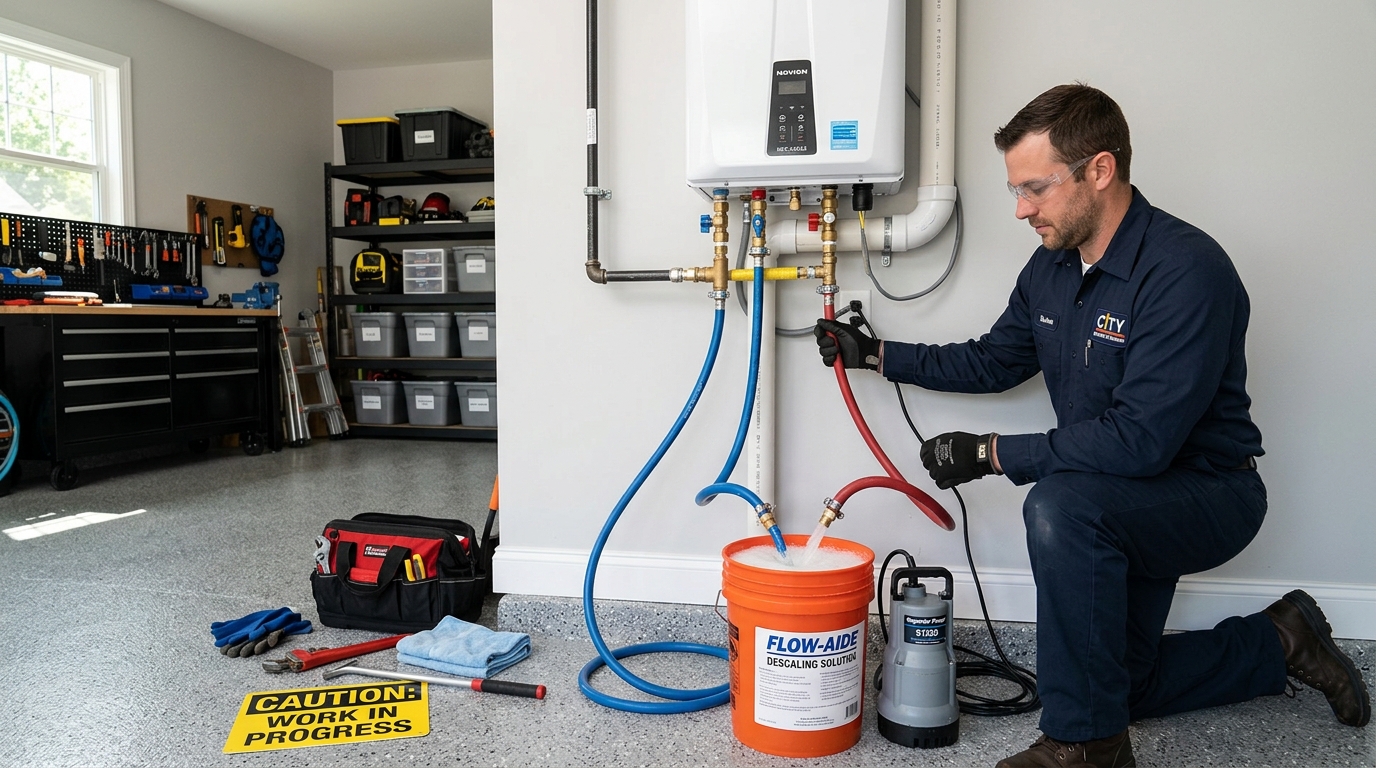
We pump a descaling solution through the heat exchanger to clear scale.
Virginia Hard Water & Tankless Heat Stress
Hard water is common in Virginia, especially in regions with limestone geology like the Shenandoah Valley and Northern Virginia. When hard water is heated inside a tankless system, minerals crystallize instantly, sticking to the copper heat exchanger. This scale layer reduces flow and causes the burner to overheat.
This thermal stress can cause the heat exchanger to crack, requiring a complete unit replacement. Annual flushing prevents this damage. If you are upgrading your water heating system, we offer expert tank water heater replacements. If you have leaks, our emergency plumbers provide prompt repairs.
What to Do While You Wait for Our Crew
Before our maintenance technician arrives to flush your tankless heater, follow these simple steps:
1. Note Error Codes
If your tankless unit shows error codes on the digital screen, note them down. Sharing these codes helps our technician diagnose issues.
2. Clear Utility Area
Clear items away from the tankless unit. Having clear space around the heater and service valves helps us set up our pump system quickly.
3. Avoid Adjusting
Do not attempt to adjust the gas control valves or internal electronic boards yourself. Let our certified technicians handle it.
Our 4-Step Tankless Flush Process
Here is how we flush and descale your tankless water heater to restore performance:
System Isolation
We turn off the electrical power, gas control supply, and cold and hot water valves, isolating the heater from the rest of the house.
Pump Connection
We attach heavy-duty hoses to the unit's cold and hot service isolation valves. We connect the hoses to a submersible utility pump inside a bucket.
Circulating Flush
We fill the bucket with a food-grade citric descaling solution and run the pump for 60 minutes. The solution dissolves scale inside the heat exchanger.
Filter & Restart
We remove and clean the unit's cold water inlet filter screen, flushing it clear of debris. We disconnect the hoses, open the water valves, and test operation.
Citric Acid vs. Vinegar for Descaling
Compare the solutions used to descale tankless heat exchangers:
- Food-Grade Citric Acid: The preferred descaling solution. Citric acid is odorless, highly effective at dissolving calcium scale, and rinses out of the heat exchanger quickly.
- White Vinegar: An alternative descaling agent. Vinegar is safe but contains organic elements that can leave a sour odor in your hot water lines.
- Chemical Descalers: Not recommended. Strong chemical cleaners can damage copper heat exchangers and are safety hazards for drinking water systems.
We use food-grade citric acid solutions to clean your heat exchanger. If you have low water pressure or blockages, see our drain cleaning services. If you need new faucet hookups, see our fixture replacement crew.
Tankless Maintenance Invoices
We offer upfront, transparent rates. Here are common estimates for tankless services:
Note: Final prices depend on accessibility, system size, and severity. We provide a firm quote before any work begins.
Tankless Descaling FAQs
Answers to common questions about tankless descaling flushes, water hardness, and warranty requirements:
We recommend descaling your tankless water heater every 12 to 24 months.
If your home has hard water (above 7 grains per gallon), annual flushing is recommended. If you have a water softener installed, you can extend the flush cycle to every 2 to 3 years.
If you do not flush your unit, mineral scale builds up inside the heat exchanger. This acts as insulation, forcing the burner to run longer and hotter to heat the water.
This increases energy bills, causes hot water pressure to drop, and can crack the heat exchanger, voiding the manufacturer's warranty.
A service valve kit consists of three-way isolation valves installed on the cold and hot water lines directly beneath the heater.
These valves allow us to isolate the unit and attach our flushing hoses. If your unit lacks these valves, they must be installed before a flush can be performed.
Do not use bleach or harsh chemicals. They can corrode the copper heat exchanger and damage seals.
While white vinegar is safe, food-grade citric acid is more effective at dissolving calcium scale without leaving a sour odor in your water lines.