Gas Line Installation
& Emergency Leak Repairs
Smell rotten eggs or suspect a gas leak? Gas leaks are serious and require immediate professional attention. We are fully licensed, Class A contractor-certified plumbers providing gas line repairs, pressure tests, and appliance hookups across Virginia. Call today to get your gas lines inspected safely!
Smell Gas? Evacuate Your Home Immediately
If you smell a strong 'rotten egg' odor, hear a hissing sound near gas pipes, or suspect a gas leak, get everyone out of the house immediately. Do not use phones, turn light switches on or off, or start cars—any spark could trigger an explosion. Call 911 and your gas company from a safe distance, then contact us for repairs.
Licensed Gas Line Services for Your Safety
Natural gas and propane are efficient energy sources for heating, water heaters, stoves, and fireplaces. However, because gas is highly flammable, gas piping must be installed and serviced by licensed, certified plumbers. At Virginia Plumbing Company, we prioritize safety, providing expert gas line installations, leak detection, and valve upgrades.
We use electronic gas leak detectors and pressure gauges to locate micro-leaks in black iron, copper, and flexible Corrugated Stainless Steel Tubing (CSST) gas lines. If a leak is found, we replace the damaged pipe sections and verify safety with pressure-drop testing.
If you are installing a gas range, gas dryer, or backyard fire pit, we run new gas lines from your main meter to your appliances. We also upgrade gas valves and hookups to ensure compliance with local building codes. If you are upgrading your heating, see our water heater services for gas connections.
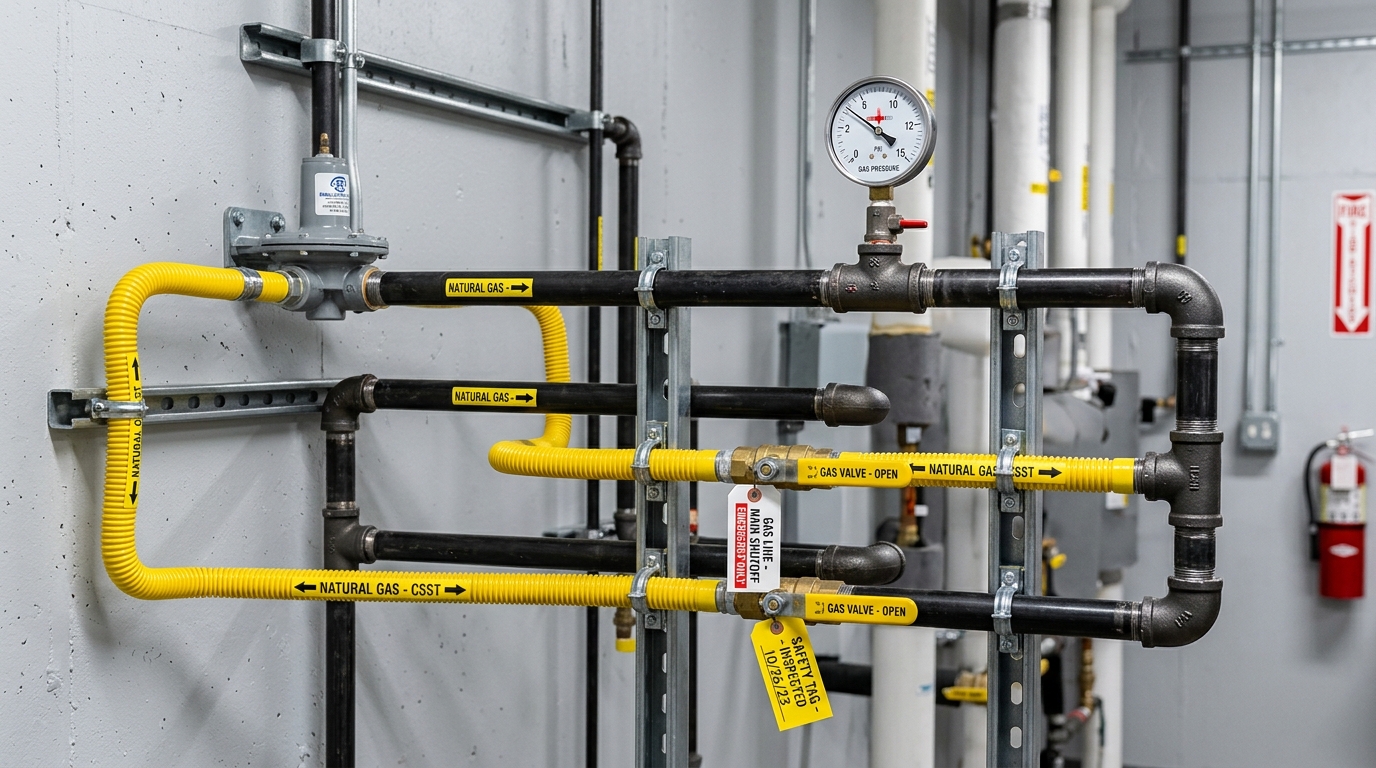
We install and repair natural gas and propane pipelines to meet safety standards.
Virginia Building Codes & Gas Line Standards
In Virginia, gas piping installations must comply with the International Fuel Gas Code (IFGC). All new gas lines require pressure-testing at 15 PSI for at least 15 minutes before utility connection. We handle the permitting and testing process, ensuring gas lines are safe and compliant.
If you smell gas or have low gas pressure, our team can help. If you have active water leaks near gas lines, our emergency plumbers provide prompt leak repairs. We recommend annual gas line inspections to ensure valves, connections, and pipes remain secure.
What to Do While You Wait for Our Crew
If you suspect a gas leak or smell gas, follow these critical safety steps immediately:
1. Evacuate Promptly
Leave the house immediately. Open doors and windows on your way out to vent gas, but do not waste time if the odor is strong.
2. No Sparks
Do not touch light switches, use phones, light matches, or unplug appliances. Any electrical spark can ignite gas.
3. Turn Off Meter
If safe, turn off the main gas shutoff valve at the gas meter. Use a wrench to turn the valve tab perpendicular to the pipe to stop flow.
Our Gas Line Service Process
Here is how our licensed technicians run pressure tests and install gas piping safely:
Safety Isolation
We turn off the gas supply and inspect the area. We use electronic leak sniffers to detect gas leaks in valves, fittings, and pipes.
Pressure Testing
We attach a pressure gauge to the line and run a pressure-drop test. A drop in pressure indicates a leak somewhere in the line.
Piping Installation
We run black iron or flexible CSST gas piping, installing shutoff valves and sediment traps at each appliance connection point.
Code Inspection
We run a final pressure test, check all joints with bubble solution, assist with local inspections, and light appliance pilot lights.
Gas Piping Materials Comparison
Compare common materials used in residential gas line installations:
- Black Iron Pipes: The traditional standard for gas piping. Strong and durable, but rigid, requiring threaded fittings and manual labor to install.
- CSST (Corrugated Stainless Steel Tubing): Flexible yellow tubing that runs through walls with fewer fittings, lowering leak risks. Must be grounded to prevent lightning damage.
- Copper Piping (Gas Rated): Allowed in some areas, but not recommended where gas contains high sulfur, which can cause copper to flake internally and block valves.
We use black iron for exposed runs and flexible CSST for running lines through walls. For households updating kitchen appliances, see our fixture replacement crew to hook up gas ranges and stoves safely.
Gas Line Service Invoices
We offer upfront, transparent pricing. Here are common estimates for gas line services:
Note: Final prices depend on accessibility, system size, and severity. We provide a firm quote before any work begins.
Gas Line FAQs
Answers to common questions about gas leaks, piping materials, and appliance safety:
If the odor is very faint and located near a gas stove or heater, check if a pilot light has gone out or if a burner valve is slightly open.
If the smell is strong, hear a hissing noise, or suspect a gas leak, get everyone out of the house immediately. Call 911 and your gas company from a safe distance.
Natural gas and propane are naturally odorless and colorless. Gas companies add a harmless chemical called mercaptan, which smells like rotten eggs.
This strong odor makes even tiny leaks easy to detect, allowing you to react and stay safe.
CSST (Corrugated Stainless Steel Tubing) is flexible tubing that runs through walls with fewer joints, lowering leak risks.
CSST is safe when installed by licensed plumbers. It must be bonded to your home's electrical grounding system to prevent lightning strikes from puncturing the tubing.
Yes. Natural gas appliances can produce carbon monoxide (CO)—a colorless, odorless gas—if they do not burn fuel completely.
We recommend installing CO detectors on every level of your home, especially near gas appliances, to alert you to leaks.